The field of veterinary medicine is known to be a small world where paths often cross in the most unexpected ways. For veterinarian Dr. Addison and Ross vet student Lauren Buckhout, the saying couldn’t be more true.
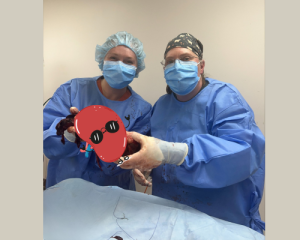
In early July of 2024, VetEvolve team members Dr. Renee Addison, Dr. Vanessa Mitchell, and LVT Ashley Anderson traveled to St. Kitts in the Caribbean to work at a community outreach event where they provided veterinary care for pets in need on the island alongside Ross students and faculty. Vet student Lauren Buckhout was assigned to work with Ross alumna Dr. Addison at her station, which sparked a unique connection.
After a busy but successful day of treating many animals in need, the two got to talking. They realized Lauren is from the same small town where Dr. Addison practices small animal emergency medicine at Veterinary Emergency Services in Verona, Virginia. This chance meeting led to an exciting opportunity—an unofficial externship where Lauren would shadow and learn from Dr. Addison while on school breaks.
In her own words, Lauren shares how this externship has shaped her journey as a future veterinarian:
“Shadowing Dr. Addison has been an invaluable expansion of my education, allowing me to apply what I’ve learned in the classroom to real clinical cases. I’ve had the chance to think critically, challenge myself, and gain confidence in my skills. Together we saw and discussed heart disease, toxicities, saddle thrombus, acid-base disorders, foreign bodies, blood transfusions, and more. With Dr. Addison, I scrubbed into surgery for the first time when she performed a splenectomy. I learned how to unblock and manage a cat with azotemia and assisted in neutering a kitten. I learned the importance of taking three views for abdominal radiographs, and when the time came to study this in my diagnostic imaging course, I could apply what we had discussed.
We saw a case of a German Shepherd puppy with hypertrophic osteodystrophy (HOD) and discussed the clinical signs, radiographic presentation, and treatment, which included intensive care in the hospital. When I began the next semester, this condition came up in a pathology course, and I was able to answer many test questions by drawing on my clinical experience.
Dr. Addison is a fantastic mentor who has always treated me with the respect of a colleague, challenged me in ways that have inspired my growth, and encouraged my curiosity without fear of judgment. She has gone above and beyond to provide me with various resources and support that I will continue to draw upon as I continue my education. The VES team, VetEvolve, and Dr. Addison have been very welcoming and patient with me as I learn the ropes, and I look forward to working together more in the future. I would recommend an externship with the VES and VetEvolve team to any student looking for a down-to-earth and education-filled experience!”
Lauren’s experience highlights the power of mentorship and hands-on learning in veterinary medicine. At VetEvolve, we believe in fostering meaningful connections between veterinarians and future professionals, helping to shape the next generation of skilled and compassionate veterinary caregivers. Stories like Lauren’s reinforce the value of real-world experiences and the lifelong impact of a great mentor.
- VetEvolve Practice: Hoffman Animal Hospital, Annapolis, Maryland
- Graduate: Western University of Health Sciences | DVM
- Specialty: Medical Director
- Certifications: Diplomate, American Board of Veterinary Practitioners (Canine & Feline Practice); Fear Free Certified; RECOVER CPR Certified
From Surface Warfare to Veterinary Medicine
Dr. Carrie Muller’s path to veterinary medicine wasn’t traditional. A native of Maryland’s Eastern Shore, she first served her country as a Surface Warfare Officer in the U.S. Navy after completing her undergraduate degree at the University of Maryland. This early leadership experience would later prove invaluable in her veterinary career.
After transitioning from military service, Dr. Muller pursued her veterinary degree at Western University of Health Sciences, followed by internships in Small Animal Medicine, Surgery, and Clinical Research at North Carolina State University. Her veterinary journey eventually led her to VetEvolve, where she found an organization that aligned with her values, actively nurtured her career goals, and supported her desire for work-life balance — giving her more opportunities to devote time to causes important to her.
In 2023, Dr. Muller joined Hoffman Animal Hospital in Annapolis, MD as the Medical Director. The move to VetEvolve came with a return to familiar surroundings, the chance to better balance her career and family, and included support to pursue veterinary goals.
Pursuing Excellence Through Continued Growth
In December 2024, Dr. Muller achieved a significant milestone by becoming a Diplomate of the American Board of Veterinary Practitioners, earning certification in Canine and Feline Practice — a prestigious accomplishment requiring exceptional expertise and rigorous testing.
“This was a professional goal for me, and something I was able to pursue more fully since joining VetEvolve,” Dr. Muller explains. “The significant support they provide shows they truly see the value in continued training and professional development.”
Shaping the Future of Veterinary Medicine
At VetEvolve, Dr. Muller found more than just support for her own goals — she discovered an opportunity to make a broader impact on the profession. Together with Dr. Renee Addison of Veterinary Emergency Services, she helps lead the Support from the Start program, VetEvolve’s initiative for new veterinarians.
The program combines hands-on training through wetlabs with structured off-site mentorship that addresses many of the needs of new DVMs.
“It’s a well-rounded program,” Dr. Muller said. “For example, one aspect we address is the soft skills that need to be developed — how to handle difficult conversations with clients, how to get them to agree on diagnostics, how to realize and be cognizant of innate biases.”
Creating Positive Change
As Medical Director at Hoffman Animal Hospital, Dr. Muller brings her commitment to excellence to every aspect of practice life. With her Fear Free Certification, she prioritizes creating stress-free experiences for patients and emphasizes pain management. Her collaborative approach ensures pet owners feel involved in their pets’ care and decision-making process.
Outside the practice, Dr. Muller has found VetEvolve support for causes that are important to her — and the community. At Hoffman Animal Hospital, she was able to establish the Message to Garcia program, thanks to the support of VetEvolve. The program was something she had envisioned for years as a way to support active duty and veteran clients in the Annapolis area. She discussed it with VetEvolve leadership during her interview process and was given the freedom to bring it to life in 2023. Her work with Wreaths Across America is another example of the many ways VetEvolve strives to provide veterinarians the support they need for causes that serve their communities.
Currently pursuing an MBA through Penn State University, Dr. Muller continues to expand her skill set. She’s particularly interested in data analytics and exploring how to optimize practice operations for both staff and patients.
Finding Balance
Outside the hospital, Dr. Muller cherishes time with her family, including her husband, three children, and their two dogs—a Belgian Malinois named Lilo and a German Shepherd named Katie. This balance between professional achievement and personal life exemplifies the values VetEvolve promotes.
“VetEvolve gave me the chance to pursue board certification while supporting my work to give back to the community,” Dr. Muller said. “Through programs like Support from the Start, we’re not just focusing on today’s challenges — we’re helping shape the future of veterinary medicine.”
Structured Mentorship Program Helping New Veterinarians Build Confidence Through Hands-on Training, Expert Guidance, and Collaborative Learning
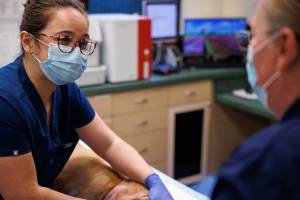 The transition from veterinary school to clinical practice marks a crucial period in a veterinarian’s career. At VetEvolve, we understand that early career support directly impacts long-term success and satisfaction in veterinary medicine. That’s why we created Support From the Start, our comprehensive mentorship program designed to give new graduates the tools, training, and confidence they need to thrive.
Today we’re taking a closer look at Support From the Start, and examining everything that is a part of the program to provide veterinarians what they need to succeed.
Dr. Carrie Muller, Medical Director at Hoffman Animal Hospital, runs the program alongside Dr. Renee Addison of Veterinary Emergency Services. She said the impact of such a program is essential for first-year veterinarians who are just learning what it means to be in an active practice full-time.
“Imposter syndrome is very real and something a lot of young veterinarians have to fight through,” Dr. Muller said. “We try to normalize it, get comfortable with it. It’s okay you’re feeling this way. It’s very much part of the process. With this program, veterinarians can see they’re not alone in these feelings and find support at the same time.”
Future Veterinarians! Interested in learning more about the opportunities and the ways VetEvolve supports your career? Explore our externship and mentorship program support here.
Personalized Local Mentorship
Every new veterinarian’s journey is unique. Our program begins with customized local mentorship that adapts to individual learning styles and goals. New doctors start with a shadowing period, followed by extended appointment times and dedicated “catch-up” blocks. Working alongside experienced veterinarians, they gradually build confidence in surgery and dentistry through hands-on training.
The pace, feedback style, and key components are tailored to each doctor’s needs, and developed in partnership with their local hospital team. This personalized approach ensures steady growth while maintaining confidence and work-life balance.
“(Support from the Start) is well rounded. It’s hitting everything new graduates need to know to get up to speed and develop their careers,” Dr. Muller said.
But a formalized program doesn’t mean rigid.
“We’re constantly maneuvering and shifting, trying to tailor it to the topics and concepts that they need and want,” she added.
Network-Wide Learning Opportunities
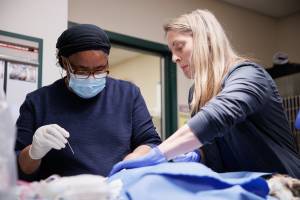
Support From the Start extends beyond individual practices. Within their first year, new doctors can participate in three hands-on wetlab events led by experienced VetEvolve mentors. These intensive sessions cover essential skills like advanced abdominal surgery, ophthalmological procedures, cardiac emergency management, and dental techniques.
To broaden their experience, each new doctor visits another VetEvolve practice within their first 12 months, focusing on their specific interests. Whether it’s emergency medicine, surgery, or other specialties, these visits provide valuable exposure to different practice styles and approaches.
What Does a Wetlab Day Look Like? Get a review of a typical session in this breakdown.
Comprehensive Resources for Success
Beyond clinical training, we provide tools to support overall well-being and professional development:
- Remote mentorship complementing on-site guidance
- Access to MentorVet and Plumb’s Pro
- On-demand veterinary specialist consultations
- Mental health resources through Aetna, AbleTo, and Not One More Vet
- Structured onboarding plans tailored to individual goals
Building Community Through Collaboration
One of the program’s greatest strengths is its ability to connect new graduates with peers facing similar challenges. Through wetlabs, practice visits, and mentor relationships, doctors build a supportive network within the VetEvolve community. This collaboration creates opportunities for shared learning, mutual support, and lasting professional relationships.
Forge a Foundation for Long-Term Success with VetEvolve
Support From the Start reflects VetEvolve’s commitment to developing confident, well-rounded veterinarians who can build fulfilling careers while maintaining healthy work-life balance. By investing in comprehensive support during these crucial early years, we help new doctors establish strong foundations for sustainable, rewarding careers in veterinary medicine.
“It’s a structured program that is individualized to you, with hands-on training — all funded by VetEvolve,” Dr. Muller said. “It gives first-year veterinarians a chance to grow their knowledge and to talk through some of the challenges and stresses they’re facing.”
At VetEvolve, we’re proud to provide people-focused support for veterinarians, practice owners, and their support teams. Our unique approach to veterinary practice partnerships powers everything we do. Ready to start your journey with personalized support? Connect with our team today to learn more.

Are you a practice owner looking for a partner who values your unique identity and supports your vision? Are you a veterinarian seeking to build a happier career? Connect with our team today to learn more about the benefits of working at a people-first organization.
In this essential webinar for veterinary practice owners and managers, VetEvolve’s Dr. Meredith Robbins shares proven strategies for successful veterinary recruitment in today’s challenging market. Drawing from her experience helping hundreds of practices with recruitment, Dr. Robbins delivers actionable insights on everything from crafting standout job postings to converting relief veterinarians into permanent team members.
Learn how to:
- Implement effective sourcing strategies beyond traditional job boards
- Create compelling value propositions that make your practice stand out
- Build successful referral programs that deliver results
- Engage candidates effectively throughout the hiring process
- Manage your practice’s online reputation to attract top talent
Whether you’re currently hiring or planning for future growth, this webinar provides practical tools and strategies to enhance your practice’s recruitment success in today’s competitive veterinary market.
- VetEvolve Practice: Companion Animal Clinic, Blacksburg, Virginia
- Graduate: Virginia Tech | DVM
- Practice Interests: Client Education, Collaborative Medicine, Internal Medicine, Soft Tissue Surgery
Finding Balance in Veterinary Medicine
For Dr. Joe Fabrizi, the path to professional fulfillment meant recognizing when change was necessary. After graduating in 2021, he began his career at a small animal veterinary practice in Northern Virginia. After two years at that practice, he realized the commute, late hours, and workload were preventing him from having a healthy work-life balance.
“My wife and I were both exhausted,” Dr. Fabrizi recalled. “With our young son at home, we knew this couldn’t continue. He needed a present father, my wife needed a husband — something had to change with our current situation.”
Through a colleague at Virginia-Maryland College of Veterinary Medicine, Dr. Fabrizi learned about VetEvolve and an opportunity at Companion Animal Clinic in Blacksburg. The move would bring him back to familiar surroundings in the New River Valley, but more importantly, it promised something he’d been seeking: genuine work-life balance.
VetEvolve: Where Actions Match Words
Dr. Fabrizi had heard positive things about VetEvolve’s people-first approach, and he quickly realized that it’s not just lip service but something put into practice every day.
“Our profession often talks about the importance of a healthy work-life balance,” Dr. Fabrizi said, “but when push comes to shove, few job opportunities really follow through on it. VetEvolve has been a breath of fresh air in that regard. I’ve personally seen the positive impacts in my own life, but also my family and friends have noticed the positive impact it has had.”
That impact comes from intentional practice management. Time is built into each day for completing notes and conducting client callbacks. When weekend shifts are necessary at Companion, veterinarians get an extra day off during the week to compensate — an uncommon benefit specialized to the practice that makes a big impact. It means less stress, less taking work home, more time to focus on patients during work hours, and more time to be fully present for family and personal life outside of work hours.
Now a father of two young boys, this balance has become even more crucial for Dr. Fabrizi.
“I love what I do, and I take a lot of pride in my role as a veterinarian and the impact it has on our community, but ultimately my family is my priority,” Dr. Fabrizi said. “VetEvolve has given me more time with them and the capacity to be there in a way I wasn’t before.”
Collaborative Medicine and Professional Growth
At Companion Animal Clinic, Dr. Fabrizi has found that having adequate time allows for a more thorough approach to medicine. He believes medicine was designed to be a collaborative effort — between doctors, practices, and clients and their pets and families. For example, at Companion, every radiograph gets a second opinion and there’s time to properly mentor newer team members.
The practice environment has also allowed him to further develop his interests in soft tissue surgery through mentorship — an area where he previously had limited experience. VetEvolve didn’t create more hours for each day, but they helped reclaim time by creating a positive work-life environment.
“VetEvolve gives you time back,” Dr. Fabrizi said. “We all know the mental load this profession can place on people. Having the space to learn and grow both professionally and personally makes a tremendous difference.
Culture of Transparency
When considering the move to VetEvolve, Dr. Fabrizi admitted to having concerns. He was feeling stretched thin at his previous position. He thought “Maybe it’s like that everywhere. Maybe it would be worse. Would the promise of better work-life balance be the reality?”
VetEvolve’s commitment to transparency stood out from the start. Before joining, he had dinner with the practice manager, other doctors, and VetEvolve leadership.
“The open and honest communication was something I valued, and more than that, it showed me how important it was to VetEvolve,” Dr. Fabrizi said. “Nothing was hidden. Gathering around the table for a meal created a chance for open conversation, where I could ask questions about the practice’s culture, and they could learn more about me in a way that was more natural.”
Today, Dr. Fabrizi is thrilled to be part of the dedicated team at Companion. He’s able to properly align his work and family responsibilities. He’s just as devoted to his work with pets and their families but can nourish the parts of his life away from work as well.
“A healthy work-life balance helps me be a better veterinarian, husband, and father”.
Dr. Fabrizi maintains his passion for photography as a hobby on the side and plays pickleball several times a week. These outside interests, he believes, make him a better veterinarian.
“Having time for hobbies, friends, and family is about more than just fun— it’s about being whole as a person. That’s something VetEvolve truly understands.”
Learning How Veterinarians Can Manage Stress Begins in School
Let’s be honest — veterinary school is intense. Between anatomy labs, clinical rotations, and endless studying, it’s easy to feel overwhelmed. But here’s the thing: managing that stress isn’t just about surviving school; it’s about developing habits that will serve you throughout your veterinary career. How veterinarians can manage stress relies on the skills and practices they’ve honed at every stage of their careers — including those first formative years in school.
VetEvolve’s Ashley Anderson, our Student Programs Partner, recently sat down to share some practical ways to keep your balance while pursuing your dream of becoming a veterinarian. Read on to learn more about how you can navigate the challenges of vet school, while still embracing everything it has to offer.
Future Vets! Interested in learning more about the opportunities and the ways VetEvolve supports your career? Explore our externship and mentorship program support here.
How Veterinarians Can Manage Stress — Starting in Vet School
Give Yourself Some Grace
Remember that overachiever in high school who seemed to do it all? Well, now you’re in a class full of them! While it’s tempting to join every club and take on multiple leadership roles, remember that you don’t have to do everything. Sure, being an Ambassador for this group or President of that organization looks good on paper, but in the real world? What matters most is becoming a competent, well-rounded veterinarian who knows how to take care of themselves.
Lean Into What (and Who) Matters
Your passion for animals brought you to vet school, but don’t let that be your only passion. Whether it’s hiking, painting, or playing in a local band, find something that lights you up outside of your studies. And those people who’ve been cheering you on? Keep them close. Family and friends are your anchor in the storm of vet school stress.
Keep Moving (Your Body Will Thank You)
We know — with so much to study, exercise might seem like a luxury you can’t afford. But here’s the secret: moving your body isn’t just about staying fit. It’s one of the best stress-busters available, and it’s free! Whether it’s a quick walk between study sessions or a morning yoga routine, physical activity can help clear your mind and reduce anxiety. Plus, pairing good nutrition with regular movement creates a foundation for handling the demands of vet school.
Take Your Hour
Here’s a not-so-radical idea: take one hour each day just for you. Not for studying. Not for clubs. Just for you. “But I don’t have time!” you might say. Trust us — this is a crucial skill that will serve you well in your future practice. Learning to advocate for your personal time now will help you avoid burnout later. It’s okay to say no. It’s okay to slow down. In fact, it’s essential.
Embrace the College Experience
Years from now, you won’t remember every detail from your pathology lectures, but you will remember the friends who helped you through them. Your classmates aren’t just peers — they’re your future colleagues and support network. Take advantage of everything campus life offers: join study groups, enjoy the beautiful campus scenery, and make memories that will last a lifetime.
Remember: This is Normal
Feeling stressed about vet school? Congratulations, you’re normal! The old saying goes, “How do you eat an elephant? One bite at a time.” The same applies to your veterinary education. When you’re feeling overwhelmed, take a step back. Look at the bigger picture. What seems impossible today will become another achievement in your journey tomorrow.
VetEvolve: Veterinary Student Support You Can Count On
The skills you’re developing now — not just the medical knowledge, but the stress management techniques, the self-advocacy, the balance — are the tools that will help you thrive in your veterinary career. By learning to handle stress effectively during school, you’re setting yourself up for a more sustainable and enjoyable professional life.
Remember, how veterinarians can manage stress is a skill that needs to be developed. Learning to be a healthy, balanced professional who can provide the best possible care for animals and their humans should be a primary goal of your veterinary school experience. Take it one day at a time, be kind to yourself, and keep moving forward. You’ve got this!
At VetEvolve, we’re proud to provide people-focused support for veterinarians, practice owners, and their support teams. From our unique approach to veterinary practice partnerships to comprehensive support for mentorship and externship opportunities, VetEvolve works with you to build the veterinary career you’ve dreamed of.
Connect with our team today to learn more.
Are you a practice owner looking for a partner who values your unique identity and supports your vision? Are you a veterinarian seeking to build a happier career? Connect with our team today to learn more about the benefits of working at a people-first organization.
Whether you’re pursuing an externship, looking for a mentorship opportunity, or searching for your first position as a DVM, interviewing is an art that every veterinary student needs to master. While these can be anxiety-inducing situations for many, there is good news: with the right preparation and mindset, you can turn what might feel like an intimidating experience into an opportunity to find the perfect fit for your career goals with these veterinary interview tips.
VetEvolve’s Ashley Anderson, our Student Programs Partner, recently sat down to share some of her top veterinary interview tips — drawn from her years of experience in working with veterinary school students and working in the industry. Let’s get started!
Future Vets! Interested in learning more about the opportunities and the ways VetEvolve supports your career? Explore our externship and mentorship program support here.
7 Veterinary Interview Tips to Find Your Perfect Fit
Be Authentically You
Your journey to veterinary medicine is unique — embrace it! Whether you waited tables to help pay for school or devoted your summers to shelter work, these experiences shape who you are as a professional. Remember, interviewers aren’t just looking at your clinical skills; they’re trying to get to know you as a person. Your diverse experiences often reveal valuable soft skills like communication, adaptability, and work ethic.
Do Your Homework
Walking into an interview without researching the practice is like starting surgery without reviewing the patient’s history — you’re setting yourself up for complications! Here’s how to prepare:
- Study the facility’s website and social media presence
- Prepare thoughtful questions about their practice philosophy
- Show interest in specific aspects of their work
- Don’t be afraid to ask challenging questions about things that matter to you, such as:
- Pain management protocols
- Anesthesia plans
- Continuing education opportunities
- Work-life balance initiatives
Remember, you’re not just being interviewed — you’re interviewing them too. This is your chance to evaluate whether the practice aligns with your values and career goals.
Know What You Want in a Mentorship
Before walking into any interview, get crystal clear about your needs. You should be able to identify the areas where you want to grow and be upfront and honest about the type of experience you’re looking for. For instance: If you need more hands-on time with dental procedures, say so. Looking to develop stronger surgical skills? Make that known.
When you understand your “must-haves” and “nice-to-haves,” you’re better positioned to find a role that will help you thrive. This clarity also shows potential employers that you’re serious about your professional development.
Everything Counts (Yes, Everything!)
Here’s an insider secret: your interview starts the moment you step onto the property and doesn’t end until you’re off it. Experienced interviewers are watching how you:
- Interact with support staff
- Handle unexpected situations
- Talk about previous experiences
- Discuss patients and clients
- Manage your energy throughout the process
Bring positive energy to every interaction. That friendly chat with the receptionist? It matters. Your response to a barking dog in the waiting room? That matters too.
The Veterinary World is Smaller Than You Think
According to the American Veterinary Medical Association AVMA, veterinarians make up less than 0.1% of the population; our professional community is incredibly tight-knit. This means:
- Word travels fast about both positive and challenging experiences
- Professional relationships matter immensely
- “Ghosting” or unprofessional behavior can have long-lasting consequences
If you decide to pursue another opportunity, that’s perfectly fine — just communicate professionally. A simple “Thank you for the opportunity, but I’ve decided to accept another position” goes a long way.
Take Your Time with Decisions
Feeling pressured to accept an offer immediately? Take a breath. It’s completely acceptable to ask for time to consider the offer and to review the contract carefully. You should feel comfortable asking for time to seek mentorship or guidance about the decision and to consider the long-term implications.
Remember, many contracts involve multi-year commitments with specific terms about early departure. Making the right decision now can save a lot of stress later.
Nail the Common Questions
Some questions appear in almost every veterinary interview. Be prepared to discuss:
- Your background and journey to veterinary medicine
- Why you’re interested in their specific practice
- Your professional interests and specialties
- Your long-term career goals
- Specific scenarios you’ve handled in your training
From Veterinary Interview Tips to Complete Career Support, Turn to VetEvolve
Remember, the best interviews feel like conversations rather than interrogations. By being prepared, authentic, and professional, you’re not just working to secure a position — you’re taking the first step in building your professional network and reputation in the veterinary community. The right opportunity is out there and with thoughtful preparation and authentic presentation, you’ll find it!
At VetEvolve, we make finding those perfect-fit opportunities for you a priority. From our unique approach to veterinary practice partnerships to comprehensive support for mentorship and externship opportunities, VetEvolve works with you to build the veterinary career you’ve dreamed of. Connect with our team today to learn more.
Are you a practice owner looking for a partner who values your unique identity and supports your vision? Are you a veterinarian seeking to build a happier career? Connect with our team today to learn more about the benefits of working at a people-first organization.
- VetEvolve Practice: Mt. Airy Veterinary Associates, Mt. Airy, Maryland
- Specialty: Medical Director, Practice Leadership
- Graduate: Tuskegee University | DVM
- Undergraduate: University of Pennsylvania | Biology
The Journey to Mt. Airy Veterinary Associates
After graduating from Tuskegee University, Dr. Brianna Cormier began her veterinarian career at a large, busy practice. But with an upcoming marriage, she wanted to find something closer to the new home she would share with her husband that would give her better work/life balance. Beyond a shorter commute, Dr. Cormier was also seeking a practice with a more consolidated footprint — one location vs. several — and a less demanding pace.
While talking with the recruiting team at VetEvolve, she learned more about two practices closer to her new home in Maryland that were looking for part-time associate veterinarians. As she discussed her relocation plans with Jessica DeCesare, they were able to work out a mutually beneficial arrangement where Dr. Cormier would commute from Northern Virginia until her wedding and help both practices, forming a hybrid full-time position.
As her wedding approached, Dr. Cormier reached out to Jessica again and shared her career interests in growing her leadership skills and expanding her veterinary clients to add exotic pets. She had been enjoying working at Mt. Airy Veterinary Associates with her hybrid position and was drawn to the “Carroll County vibe”: a people-focused culture of kind and genuine team members, including the practice manager at the time, Tanya Andrews. With the former owners set to retire, Dr. Cormier joined the team full-time in August 2021 and became their Medical Director.
Cohesion and Continual Development
As Medical Director at Mt. Airy, Dr. Cormier has been able to lead the way on important factors for the practice. One of her primary responsibilities, besides providing top-level service and care to clients and patients, is to work throughout the practice to make sure veterinarians and staff have everything they need to provide comprehensive care. She’s responsible for coordinating various elements, like recommended preventive care products and medical protocols, to ensure a high-level standard of care for the practice.
Dr. Cormier is keenly aware that having happy and healthy employees is important to having a great culture and serving their community. So, she also focuses on maintaining Mt. Airy’s strong internal fun, ‘undramatic’ culture through regular team social events. From larger holiday-themed events, like Easter Egg hunts and snowman-building contests, to weekly get-togethers like the Monday Night Dog-Walking Club, the Mt. Airy Veterinary Associates team strives to be a vibrant part of the community and a place where every team member feels valued.
“We believe it makes a big difference,” Dr. Cormier said. “We place a lot of value on people who gel with the group, maybe even more than an individual’s skill set.”
Dr. Cormier and Mt. Airy put the same effort into relationships and development opportunities with part-time doctors, relief veterinarians, technicians, and students. By establishing structured guides and practice flows, they can partner with new team members to help them successfully onboard.
An example of this is Dr. Anne Hicks, who has been spending one day a week at Mt. Airy Veterinary Associates in a flex arrangement with VetEvolve. She was nervous about joining another practice regularly after being with Essex Middle River Veterinary Center for over 25 years but loved the inviting culture of Mt. Airy. She immediately felt supported and included as part of the team.
“I was nervous at first after working at one place for a long time, but the Mt. Airy team is so nice and supportive and includes me in ways I appreciate, including asking for my opinions about client care,” Dr. Hicks said.
Dr. Cormier has continued to prioritize mentoring opportunities for veterinary students, establishing mutually beneficial externships that have clear expectations for both the student and the mentor, leading to better results for everyone involved.
“It’s our responsibility to help students dip their toes in the water, so to speak, and see what practicing is really about. We have a lot of potential to support aspiring veterinarians and technicians and can’t wait to see that develop.”
Hear from Dr. Brianna Cormier herself in this short video.
Ongoing Support With VetEvolve
As the Medical Director, Dr. Cormier doesn’t feel alone. The ongoing support that the VetEvolve team provides to her—including regular updates with her regional manager—helps keep her aware of opportunities to connect with others in the VetEvolve community. If there is a procedure Dr. Cormier has an interest in, she can reach out to VetEvolve to see if another practice can offer guidance or support, and there is always the opportunity to collaborate with another doctor or practice that can improve patient outcomes.
“Collaboration across practices is encouraged, which is good,” Brianna said. “It’s my job to make sure our doctors and support staff never feel stagnant here. VetEvolve helps with that in so many ways.”
- VetEvolve Practice: Animal Medical Centers of Loudoun, Ashburn & Brambleton, Virginia
- Specialty: General Practice, Practice Leadership
- Graduate: Kansas State University | DVM
- Undergraduate: University of Virginia | Computer Science
The Journey to VetEvolve
When Dr. Kristin Myzie started working in a veterinary clinic as a teenager, she knew she wanted to become a veterinarian. At her local clinic, in Centreville, Va., she gained experience over the next decade in nearly every role possible: boarding, reception, vet assistant, and unlicensed technician.
When she went to college, Dr. Myzie didn’t pursue veterinary medicine right away. Instead, she earned a Computer Science degree from the University of Virginia and began working as a security engineer. “Becoming a Vet was always the long-term plan,” she said. “But my undergraduate degree gave me the opportunity to grow and earn the financial resources I knew I’d need to pursue veterinary medicine.”
It also honed skills that applied directly to her true passion for veterinary medicine, such as technical writing, public speaking, and communicating with clients. After four years of working as a security engineer, Dr. Myzie went back to school and earned her DVM from Kansas State University in 2015. She returned to central Virginia and joined Animal Medical Centers of Loudoun—which has locations in Ashburn and Brambleton, Virginia—as an Associate Veterinarian. She’s remained there ever since and now has nearly a decade of experience serving the people in the region where she was raised.
“I came full circle,” she said. “(Animal Centers of Loudoun) is about 20 minutes from where I grew up.”
How VetEvolve Supports Her Success
Dr. Myzie was an associate veterinarian when Animal Medical Centers of Loudoun partnered with VetEvolve. She was skeptical about how things would change as they became part of a larger organization, based on prior discussions with other companies during the partnership process.
With VetEvolve, she could feel a real difference from other potential partners. VetEvolve invested time and energy to learn about all of the people at Animal Medical Centers of Loudoun, both as a team and as individuals. What were their goals? What did they want to achieve? How could VetEvolve help?
“They got to know us,” Dr. Myzie said. During those discussions, she shared her desire to develop her leadership skills within the practice—a natural fit for her given her interest in training and personnel development. In early 2023 when the opportunity became available for a new medical director at AMC, Dr. Myzie was named to the role.
Continued Support for Continued Success
A year later, Dr. Myzie has been pleased with the support she’s received in her new role—from her regional manager Jennifer Rossi (Northern Virginia) to VetEvolve leadership in Jessica DeCesare (Chief People Officer) and Dan Melody (Director of Operations). VetEvolve’s commitment to listening and addressing concerns both big and small has made a difference. That support isn’t limited to just veterinarians or practice owners either.
“VetEvolve continues to put people first,” Dr. Myzie said. “Sometimes we overlook that this is a career for many of our support staff too. We’re investing in our whole team: our doctors, our CSRs (client service representatives), and our technicians. I feel good about that.”
In her new role, Dr. Myzie has instituted monthly doctor meetings to build team cohesion and improve communication about patient care. She’s excited about expanding mentoring opportunities for new veterinarians and recent grads—and feels VetEvolve has positioned her team and the entire practice for success.
“It takes every single person in this hospital to make it run and we couldn’t do it without them,” she said. “VetEvolve understands that.”