VetEvolve’s program invests in team members to bolster skills, improve doctor support, and elevate patient care
Helping our team members develop their careers is an important part of our people-first culture. One of the ways we are doing that is with our Veterinary Technician Tuition Reimbursement Program. Credentialed Technicians are an important part of our veterinary teams, providing essential support to our doctors while delivering hands-on care to patients and communicating with clients. Our Tuition Reimbursement program gives members of our existing support staff the financial support they need to further their education and become credentialed veterinary technicians.
Since the inception of the program, nine team members have taken advantage of the program and participation continues to rise. Read more about three team members who have benefited from the Veterinary Technician Tuition Reimbursement program this year.
The Veterinary Technician Tuition Reimbursement Program in Practice
Maggie Peters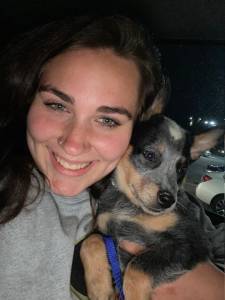
Maggie is a Vet Assistant at Manchester Veterinary Services in Maryland, where she’s worked for the last three years. Shortly after starting at Manchester, Maggie began pursuing her LVT degree to expand her own veterinary medicine knowledge, grow her confidence in helping animals, and take some of the weight off the shoulders of the doctors in the practice.
She’s also able to apply what she’s learning through the educational program to her daily work experience. “I’m able to better educate pet owners,” Maggie said. “I’m able to do more as I learn more.”
Before her practice joined the VetEvolve community, Maggie was paying for her education; now those costs are being reimbursed. “I’m definitely more at ease now, knowing that I don’t have to rely only on my own paycheck,” Maggie said. “It’s super easy (to work within the program) on my end. I appreciate everything (VetEvolve) has to offer.”
Marissa Elliott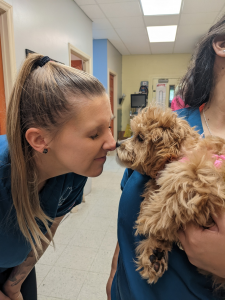
Marissa spent a decade building her veterinary career at Companion Animal Clinic in Blacksburg, Va. Now a Veterinarian Assistant Supervisor and Inventory Manager, Marissa began at Companion as a teenager working in the practice boarding facility. Seeing the impact LVTs have on a practice firsthand and the desire to continue to build her skillset led to Marissa enrolling in the VetEvolve reimbursement program.
“Having LVTs is like having gold for a practice, especially in our area,” Marissa said. “It shows the practice is committed to a higher level of care, a higher level of education for clients and their pets.”
Marissa appreciated the ease of the LVT tuition reimbursement program, allowing her to pursue individual career growth while supporting the practice with needed skills. “It takes a huge weight off your shoulders,” Marissa said. “Knowing I’m supported this way is so very helpful.”
Balancing work, a young son and continuing education is hard to do. VetEvolve’s program helps keep it aligned and provides the extra push of motivation.
“Additional training is easy to put off because it’s expensive and hard to fit in,” she said. “But with (VetEvolve’s) support, it feels like they’re rooting for me. They’re backing me up, instead of me trying to do all of this completely on my own.”
Brettan O’Bierne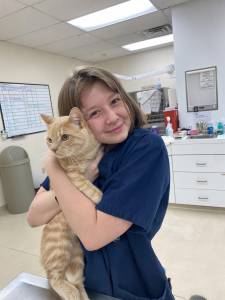
Brettan wasted little time embracing the LVT tuition reimbursement program following her start at Dublin Animal Hospital in the middle of 2022. Now a Technician Supervisor and roughly halfway through her education program, Brettan was thrilled to take advantage of the assistance offered.
“I had just graduated from college, and financially I was on my own for the first time,” Brettan said. “I just didn’t have any money for more school then. There is no reason why you shouldn’t do this if you’re working in Vet Med and want to further your career.
“It’s literally the best opportunity landing in your lap.”
The financial reimbursement and professional development were both big draws for Brettan, and the opportunity to use her place of employment to complete various clinical requirements was also beneficial. Brettan relied on Dr. Maria Bruck-Madlin at Dublin Animal Hospital to verify her clinical work, often aided by the connections the practice has in the community. She was able to balance school, work, and clinical responsibilities and seamlessly apply what was learning to work—and vice-versa.
Best of all, Brettan was able to dictate the pace of the program. “It’s really self-paced, which is a huge, positive thing for me,” she said. “ You have the power in your hands.”
VetEvolve Provides a Veterinary Technician Tuition Reimbursement Program and More
Whether you’re a veterinarian looking for a new opportunity, a practice owner seeking a partnership to support your business or part of a veterinary medicine support team looking to grow your role and career, VetEvolve has the network, people, and resources to help make your ‘Happy Here’.
The Veterinary Technician Tuition Reimbursement Program is just one example of how VetEvolve prioritizes supporting our team members. Connect with us today to learn more about how we can help.
“I really appreciate the program and what it offers. It’s been awesome!” Marissa said. “VetEvolve will make it happen for you.”

Interested in joining VetEvolve? Learn more about our personalized career options and how we can support you in your career.
VetEvolve Announces Two Internal Promotions
VetEvolve is proud to announce two recent promotions. Karen Rohde and Jennifer Rossi have both been elevated to Regional Managers after excelling previously as practice managers within the VetEvolve family of practices. Both bring years of experience managing and developing local leadership to provide excellent customer experiences which will now be leveraged as they each take management over a regional group of practices.
These promotions highlight both VetEvolve’s people-first focus and our commitment to developing career growth paths for all team members as part of the support they receive. VetEvolve has always believed in leveraging the strength of our network to help veterinarians be the best they can be and also recognizes the strengths and value members of individual teams can offer when given the chance to thrive.
Let’s learn more about our two newest regional managers.
Karen Rohde
Karen is the Tennessee Valley Regional Manager, where she works with practice managers and their veterinary teams to develop and hone a people-first culture that delivers excellence in patient care and client service.
Karen had a career as a teacher before becoming a receptionist at a practice over 16 years ago. She was able to use her organizational skills and management experience from her previous career to improve the practice’s operations and was promoted to practice manager. She joined Tazewell Pike in 2017 as Hospital Administrator where she worked side by side with Dr. Joanne Hibbs in growing the practice before it joined VetEvolve in 2021. Karen was instrumental in helping Dr. Hibbs navigate the process of partnering with VetEvolve.
Karen has a Bachelor of Science degree from Adelphi University and lives in Tennessee with her husband of 32 years. She enjoys traveling, gardening and discovering new food hot spots around town and around the country.
Jennifer Rossi
Jennifer is the Northern Virginia Regional Manager, where she is responsible for developing the leadership and management skills of the veterinary teams in her region to create a culture that delivers exceptional client service and patient care.
Jennifer has more than 25 years of experience in the veterinary field, including 20 years as a Practice Manager. She assisted in opening two hospitals and grew them to over $4.5M in annual revenue. She chose to be in the veterinary field because she enjoys the challenges of a small business environment and has a true commitment to the human-animal bond.
Jennifer graduated from the University of Maryland with a BS in Biology and has an MBA from George Washington University. Outside of work, she enjoys going for long walks with Zoey, her Border Collie, and snuggling with her cats.
Investing in Our People is Key to Our “Happy Here” Approach
Karen and Jennifer continue the VetEvolve tradition of promoting from within to fulfill key leadership roles. We focus on building relationships and inspiring growth throughout our partner practices. Our leaders are dedicated to making sure every veterinary professional at every stage has the support they need, when they need it. We never lose sight of why our job is important — it empowers veterinarians to deliver consistently high-quality care for pets.
Whether you’re a veterinarian looking for a new opportunity or a practice owner seeking a partnership to support your business and its growth, VetEvolve has the network, people, and resources to help you find your ‘Happy Here’ destination.
Interested in joining VetEvolve? Learn more about our personalized career options and how we can support you in your career.
Most people enter the veterinary profession because they’re passionate about pets, not because they want to be a cog in a corporate machine.
That was true for Lisa Maynard when she came out of retirement in 2017 to join Lake Forest Animal Hospital as the kennel manager.
As a former business owner and someone who has trained dogs since she was a teenager, running a kennel was the perfect opportunity for Lisa to merge her personal and professional passions. She took advantage of that opportunity and significantly built-up Lake Forest’s pet boarding and day care business, including during the challenging COVID-19 era.
When Lake Forest partnered with VetEvolve in 2019, it only elevated Lisa’s excitement about her job and her career aspirations. She saw greater opportunity to make an impact in the company across the family of practices and proactively developed a plan that she shared with the Operations team on how she could improve and grow boarding for VetEvolve.
The team loved her plan so much, in May 2022 she was promoted to a newly created position: boarding operations manager. Now, she works across VetEvolve kennel teams to support and grow the practices’ boarding operations. Her management experience and entrepreneurial spirit help the kennel teams improve processes, procedures, services and facilities.
“VetEvolve offered me the potential to do that very thing that was just in my heart and soul to do,” she said.
Lisa credits VetEvolve’s people-first philosophy with recognizing her unique experience, listening to her ideas, and finding a way to leverage it for the company’s growth — and her own professional development.
“VetEvolve has allowed me to grow,” she said, noting her current responsibilities meld her marketing degree, boarding operations experience, dog training expertise and the 27 years she spent as a business owner. “They’ve offered me a lot because of my diverse background and I’m very fortunate that VetEvolve sees those things, because a lot of companies wouldn’t. I probably could not be doing this same thing with my passion in too many other places.”
Lisa loves the spirit of teamwork throughout VetEvolve and the ability to work across multiple locations to train and educate team members so they have confidence handling dogs properly.
“It’s so important to me that the folks around me can excel. When they feel confidence, they will exude that to the client,” she said.
Ultimately, Lisa said her happiness and job satisfaction at VetEvolve come from feeling appreciated and working with like-minded people toward delivering an excellent customer experience for their clients.
“Knowing that I’m in a company that wants you as an individual to grow is so vital,” she said. “Being recognized for what you know, that’s pretty powerful.”

Looking for a veterinary job? Learn more about VetEvolve’s personalized career options and the benefits of working at a people-first organization.
At VetEvolve, we are committed to supporting our doctors throughout their careers so they can deliver exceptional patient care every day to their patients and their clients. One of the ways we support them is by continuing to invest in our veterinary facilities to elevate patient care and bring efficiency to the practice. Since we started VetEvolve in 2014, we have invested heavily in capital expenditures to support our practices, and this year alone, we expect to spend over $1 million.
Sometimes discovering opportunities for capital expenditures at a clinic starts early on in our partnership and even during discussions in the buying process. Our team likes to find out what a practice has not been able to get to as sole proprietors, to help them hit the ground running once they become part of the VetEvolve family. In fact, for the first practice we ever partnered with, we bought a digital x-ray machine before the transaction occurred so they could start using it on the first day!
Most importantly, we are focused on seeking ideas from our doctors and staff to get them what they need to be successful. We spend time with each practice and the doctors and staff there to determine which capital investments (or non-capital investments) we need to make in order to help them be their most efficient, achieve the highest standard of care, and be happy where they work.
Elevating The Standard of Care
VetEvolve is dedicated to helping our doctors and practices elevate their standard of care and expand service offerings with needed equipment. While our support is custom to our doctors’ and staff members’ individual needs, the first focus for many practices is ensuring that they have access to state-of-the-art imaging equipment, including digital dental and x-ray machines.
We also frequently help practices that still use paper records implement an EMR, or electronic medical record system, early on in our partnership (we should note, however, that switching from paper to EMR is not a requirement). On top of making practice operations easier for doctors and overall more efficient, an EMR helps to better track trends in annual lab work. For example, if a dog gets sick at 10 years old and has been to regular wellness appointments over the years, an EMR can help doctors key in on the exact date of change in a pet’s health.
Many of our partner practices struggle with having the time, space, and tools for efficient inventory management prior to our partnership. VetEvolve offers proprietary tools and resources to improve this.
Another improvement we have helped with at our partner practices is buying and implementing rapid laboratory equipment to shorten lab processing times. Additionally, on a practice-to-practice basis, we have helped doctors gain access to specialty equipment like advanced surgical monitoring, orthopedic rehabilitation equipment, and more.
Why Our Veterinary Talent Is Happier Here
VetEvolve’s message of “Happy Starts Here” centers on a culture of listening to every doctor and staff member to make sure our team understands what practice teams need to be successful. From high-quality, modern equipment to implementing processes that improve upon existing structures, VetEvolve works with the individuals at each of our practices to make investments across our portfolio that attract and retain doctors and staff.
Having state-of-the-art equipment is a key element in keeping not only our veterinary talent but the pet owners they serve happier, and animals healthier. Providing up-to-date imaging equipment and giving our clinics the ability to match a high standard of care is a huge part of our ethos as veterinary practice owners.
Helping newer doctors get acclimated quickly and feel confident at work is a top priority for our recruitment and onboarding team. One way that our practice investments aid this process is by helping to implement an EMR (Electronic Medical Record) system, as younger generations of veterinarians are used to digital methods of working and communicating. While we never force a specific operating system onto any of our partner practices, having a digital system in place can eliminate the need for paper records, often eases onboarding for younger doctors, and leads to easier-to-follow treatment plans in the long run.
Another practice highlight that can help doctors to grow within their field is the possibility of attaining more advanced equipment as veterinarians gain experience and see more demand for their specialties. In a practice owned by sole proprietors, attaining this type of equipment may be an unrealized pipe dream, but with the support of a partner like VetEvolve, it can become a reality. This will allow doctors to widen their service offerings and deepen their work in a specific area of interest, such as being able to treat new types of animals like exotics, or offering more specialized services in a particular treatment area like surgical or dental procedures.
Keeping Each Practice’s Individuality Alive
In many of our conversations with owners, doctors, and staff about the transition of ownership to the VetEvolve team, practice teams often express concern over giving up control and submitting to immense, standardized changes. VetEvolve values a true partnership approach with practice managers, doctors, and staff, and does not force teams to implement tools, software, or processes that do not work for them just for the sake of standardization across practices.
Unless a tool or system is no longer viable, we will work with practice teams to preserve what is working and improve upon existing systems. In extensive conversations with doctors, practice managers, and leaders, we listen to their individual concerns and needs and work to find ideal solutions — whether those require capital expenditure or only minor tweaks to an existing process.
On the other hand, we always work to balance fostering practice individuality with giving clinics a deep level of support, partially by providing the proper training for every piece of equipment and new system implemented. For new equipment training, depending on the specific technology, the combined support of VetEvolve and our industry partners gives doctors access to hands-on training so they feel confident, get all questions answered, and make sure they get exactly what they need to use the equipment properly and efficiently.
Helping Every Team Member Take Pride in Their Practice
While not necessarily capital expenditures, VetEvolve invests in a variety of additional practice improvements that help doctors, managers, and practice staff feel excited and proud of working at their practice. In the past, we have been blown away by how much small improvements can help morale and bring all members of a clinic together.
Building improvements as simple as a new coat of paint, revitalized waiting area, new front desks, and more really can improve the client experience. We even often see practice teams want to pitch in and help because, with the ability to easily make these kinds of changes afforded by our partnership, they are excited to be a part of the change.
Small space changes can also help to improve processes for practices and staff, such as repositioning or reconstructing treatment areas, adding tables, and trying different setups to improve the flow of the hospital and the efficiency of treatment. Some of the clinics we work with occupy spaces not originally made for veterinary uses — such as old residential buildings — and knocking out walls, changing entrance points, and more can really make a difference in how the practice operates.
Smaller investments into practice improvement are not just limited to physical changes, but also include improving our practices’ online presence. We often invest in website improvements or the building of new websites, which helps practice staff with marketing initiatives.
Other marketing spending includes initiatives like creating a new sign for a building and helping clinic teams acquire other similar physical marketing and branding pieces. At VetEvolve, we understand that even small improvements can make a huge difference in making clients, doctors, and staff members all happier at their practice. Every decision and expenditure we make is focused on the people it affects. For us, achieving ROI means retaining doctors by helping them to feel supported and investing in their growth, and keeping animals healthy and happy by helping practice teams provide an efficient, high standard of care.
VetEvolve Helps Every Team Member With Personalized Support
If you are interested in hearing more about how VetEvolve helps our partner practices thrive by making sure that “Happy Starts Here” for doctors, staff, and pets and their owners, please don’t hesitate to reach out.
Putting Veterinary Industry Employees’ Happiness at the Forefront
People rarely (if ever) go into the veterinary industry without having a true passion for it. You may even remember the specific moment when you decided to have a career in veterinary medicine. Maybe it was when you got your first puppy, your first time riding a horse on a farm, meeting a pet in need or simply a nondescript moment when you realized that working with animals was your calling.
The veterinary industry offers exciting and rewarding opportunities for doctors, veterinary technicians, support staff and practice managers alike who get the chance to care for animals.
Even if that passion never wanes, throughout your career, you may find that your aspirations or interests change. Perhaps you discover you want to explore different types of services like caring for exotic pets, performing more extensive surgeries, or adding acupuncture to your practice. Maybe you have new priorities in life that require more of your time. Or, perhaps you simply want to slow down a bit.
Most organizations will offer standard support such as opportunities for continued education or mentorship programs. But life isn’t always so linear, and it typically can’t be squeezed into a one-size-fits-all box, and you can find yourself stuck in a situation that leaves you feeling less than fulfilled, or perhaps worse, burned out.
A Better Way to Work
At VetEvolve, we know that our team members’ career objectives may change over time, and what makes them happy today may not be the same thing that will make them happy two, five or 10 years from now. This is especially true for 88.3% of our team members who identify as women, many of whom have started families and need extra grace and accommodation through pregnancy and early parenthood.
Our “Happy Starts Here” program is grounded in supporting the total well-being of all of our team members to be sure they are happy inside and outside of work. As far as we’re concerned, it’s simple: we care about our employees, and we want them to feel empowered to live their best life.
Your Career is Exactly That: YOUR Career
As mentioned, one size never fits all when it comes to careers, and a career shouldn’t negatively impact your life outside of work. We know that, and we tailor each employee’s path to their individual needs. We approach relationships with our employees as a partnership, committing to having open, honest and ongoing conversations at our first interview and every single meeting afterward. Each employment arrangement is customized, and is flexible as time goes on.
Here are some of the ways we support our employees through life’s changes:
- Pregnancy Support and Parental Leave: We support pregnant employees and arrange schedules during pregnancy to make sure they can attend doctor’s appointments, parenting classes and lab tests. We offer parental leave for new parents.
- Flexible Return to Work Schedules: New parents sometimes expect that they will return to work full time, but then after parental leave, they may realize they may want to adjust their schedule to spend more time with their new baby. We offer flexible return to work options customized to their needs.
- School Aged Children— After School and Summertime Schedules: As kids get older, parents have a different set of needs, including adjusted schedules for picking up kids after school or making sure they get to extracurricular programs on time. Summer is a whole different animal, often with childcare challenges, camps and vacations thrown in the mix. We offer shorter days or the option to work a part-time schedule as options for managing kids’ ever-changing itineraries.
- Leave of Absence: At VetEvolve, we support team members who want or need to take a leave of absence. Leaves can be for a variety of reasons, including pursuit of an opportunity within your field, such as going to Africa to study cheetahs, as one of our employees chose to do. It could also be for medical issues that require longer treatment and/or recovery time.
- Caring for Family Members: Employees are often caregivers, either for their children or for elderly parents, grandparents or other family members. We help take some of the burden off by adjusting schedules as needed to take family members to doctors’ appointments, physical therapy, or other treatment programs.
- Permanent Part-Time Position: We offer permanent part-time positions, often with benefits, to help employees keep their lives balanced.
How We Do It
We champion flexible, customized career paths that are achieved through proactive communication with our employees. Conversations can happen whenever, and as often as necessary, to make sure each person is comfortable with their arrangement. We don’t wait for contract renewal meetings to discuss our employees’ happiness.
If there’s a change that we can accommodate, we look to make that change in a thoughtful way with proper planning so that everyone wins. And the benefit to us is not only knowing our staff is getting the support they need, but also knowing that happy people are more productive and motivated to do better work. Together, we create a fun, meaningful and supportive environment for all.
To learn more about our career opportunities, visit our Careers page.
What Is a Relief Veterinarian — And How Is It Different from Part-Time Veterinary Work?
Relief and part-time veterinary work are growing options for passionate professionals seeking flexibility in their careers. A relief veterinarian fills in temporary positions at different clinics when needed, whether that be due to a leave of absence, sudden staffing changes, a high-volume caseload, or anything else. Part-time veterinarians similarly fill in at clinics but tend to work at one clinic at a time, offering more stability. Both options allow professionals to have more control over their work schedules while helping animals and the veterinarians they’re filling in for alike.
As burnout becomes a more prevalent threat in the veterinary field (and all fields), veterinarians are increasingly focusing on cultivating a better work-life balance. Amidst the Great Resignation, both part-time and relief veterinary work provide options for veterinarians to achieve the flexibility they’ve been seeking — offering an intermediary alternative that may be better than leaving the field permanently. This is where the main appeal of veterinary relief comes in — it allows you to work as little or as much, when and where you want. And while it provides less certainty than a full- or part-time position, working as a relief veterinarian puts scheduling at your fingertips, allowing you to put life first when it matters most.
However, there are additional responsibilities that a relief veterinarian must take on that those working full-time or part-time are exempt from. For instance, relief vets are paid as a contractor via1099 and must manage paying their self-employment taxes, licensing fees, and professional liability insurance. Since relief veterinarians typically work on an on-call, as-needed basis (similar to substitute teachers), most will work at multiple hospitals, complicating the billing, collecting, and tax filing processes even more. Working for a company like VetEvolve can help veterinary professionals mitigate this, but it will still be trickier to navigate than if they were working full- or part-time.
Alternatively, working as a part-time veterinarian is more stable, and still a great way to keep working through periods when life demands more attention than work, as it allows veterinarians to flex up or flex down to match the ebbs and flows of situations. So if you’re going back to school, need to take care of children or other family members, or want more time to pour into another passion, part-time veterinary work may be your best option.
The Top 3 Advantages of Choosing Part-Time Over a Relief Veterinarian Career Path
It Helps You Avoid Burnout While Still Giving You a Regular Work Schedule
As mentioned above, for veterinarians, burnout is a real threat. Between the physical exhaustion of being on your feet all day, staff shortages, the mental exhaustion of daily problem-solving, the emotional exhaustion of treating animals in pain, and managing pet owners who are stressed and even in panic, over time veterinary work can be more than a handful. Add onto that a growing caseload and long hours, and you’ve got a potent recipe for burnout.
Relief and part-time veterinarians are an antidote to burnout for all parties — including the relief/part-time vets themselves, vets they may be filling in for, and the rest of the professionals working at that clinic. When brought in as an extra set of hands to help with case overload, they’re able to take some of the mounting pressure off of full-time veterinarians and support staff quickly, immediately reducing stress. When filling in for another veterinarian, relief personnel help those vets take a vacation, or focus on other life goals, family, or areas of interest, ultimately making their career more fulfilling and sustainable in the long run.
However, part-time veterinary work includes these same rewarding qualities but a more dependable work schedule. Whereas relief veterinarians are treated as “on-call,” part-time positions include more predictable schedules, ensuring a more consistent flow of work, pay, and benefits. A part-time work opportunity will also allow the veterinarian to get used to the clinic’s culture and processes, and also give the vet the opportunity to make more of a long-term positive impact.
A veterinarian will also have more say over the type of medicine practiced at a specific clinic when working part-time. Since a relief veterinary job is considered as more of a substitute position,these veterinarians usually will not get the chance to impact change or protocols. Having a seat at the table can help make a job feel more fulfilling than just going along for the ride without any decision-making power or input.
You Can Curate a Better Work-Life Balance With Options to Flex Up or Down When Needed
Veterinarians typically have long hours of high-stress, rewarding work ahead of them every single day. In order to stay excited and continuously bring their best selves to work, there needs to be a good work-life balance in place.
Missing out on important life moments can lead veterinarians to resent their jobs, which can ultimately affect their quality of work. That’s why it’s important for all parties involved that vets (and all professionals!) have things to look forward to outside of work and feel present in their daily lives. At VetEvolve, we believe that happier vets really do make for happier pets and pet owners. We know well-rested professionals are more animated by their work and will be able to give more energy and effort to their jobs on a daily basis.
Being a relief veterinarian helps with this, as it allows vets to choose and claim their own shifts where and when they want to work. This makes relief work a great option for veterinarians who want to spend more time with family, dedicate their attention to other interests, or work in a variety of new, exciting environments and locations that keeps their work diverse and interesting.
Similarly, being a part-time vet allows a level of flexibility for veterinary professionals to feel present in their lives. If a long-term circumstance becomes a priority outside of work, a part-time vet will be able to negotiate flexing down their work schedule to focus on other areas while still having dependable work.
Since relief veterinary work depends on demand, it may be harder for a relief worker to plan their schedule and ensure they have enough work around other responsibilities, especially amidst personal life stress. A part-time veterinarian will have more support through potentially anxiety-inducing life events and won’t have to worry about managing every aspect of their career on top of their personal life.
It Provides You More Opportunity in a Labor Shortage Market
The demand for veterinarians is currently high and projected to grow 17% from 2020 to 2030. About 4,400 openings per year are predicted in the veterinary field throughout this decade. So for students that are considering veterinary school, it is not only a highly rewarding but also a stable, job-producing path.
This means there is vast opportunity for both current and future veterinary professionals, and, in lieu of being able to fill all those open full-time positions, part-time and relief veterinarians are and will continue to be incredibly high in demand. With high caseloads and positions needed faster than they can be filled, veterinarians can use all the help they can get. And both relief and part-time veterinarians can feel satisfied knowing that the work they do truly helps other professionals and the animals in their care.
Whether You’re Sold on Becoming a Part-Time or Relief Veterinarian or Want to Explore Full-Time Positions, VetEvolve Can Help
At VetEvolve, our philosophy is to focus on our people first so they can focus on helping animals. We’re known for helping veterinarians at every stage of their career find and keep their passion for veterinary work, and we’re committed to helping you have a happy, fulfilling career that lasts.
Our dedicated, people-focused mentors will support you from the beginning and at every point going forward. Through challenges like high stress, self-doubt, or moments when personal life gets in the way, we’re there, listening, and ready to assist in advising your career decisions. We’re not just practice owners, we truly foster a family environment. We care about you and your experience and work hard at our jobs to make yours easier.
In times of triumph, our incentive program will reward your hard work. And our great benefits and continuing education support will help you feel secure in your job and continuously move forward toward your goals.
Reach out to VetEvolve to learn more or to explore openings with us today.
The Perils of Veterinary Burnout
There’s no way around it — as rewarding as taking care of animals can be, veterinary medicine is naturally an emotionally exhausting choice of career. Stringent pet owner demands coupled with expectations from colleagues and self-induced pressure to perform can lead to mounting stress for professionals if not properly taken care of. Add to that the compassion fatigue of witnessing repeated trauma (injury, illness, death), and you’ve got a potent recipe for veterinary burnout.
So how can you take proactive steps early on to help you battle burnout in the long run? From therapy and support groups to working under the right practice owners and within a great company culture, there are myriad options for robust support. Read on to explore the options for individualized veterinary support.
Know the Symptoms
Combating veterinary burnout first starts with recognizing it while it’s happening — and before it reaches a critical point. Symptoms of stress include physical, mental, emotional, behavioral, and spiritual aspects. Prolonged stress can affect every area of your life, so it’s important to get out ahead of it.
If you constantly feel tired, sleeping no longer makes you feel rested, and/or you get sick much more easily, you may be experiencing the physical effects of burnout. These may also include chronic aches and pains or flare-ups of past physical problems, extreme or immediate weight fluctuation, or sexual disinterest.
Listen to your coworkers for insights into your emotional health. This may include feeling and acting depressed, overly angry, or irritated, and crying much more easily, with small day-to-day issues causing more upset than usual.
You may also feel preoccupied, which can affect your short-term memory, and start to think of situations in extremes, leading to lowered ability to solve problems. Additionally, you might start to feel paranoid about your relationships with others and reject help when you most need it. Consistently showing up late to work, not showing up at all, and acting with decreased professionalism are some more obvious signs to watch out for. These are all great things for coworkers and superiors to keep an eye out for — and for you to be mindful of as well with those you work with.
Finally, prolonged, extreme stress can even affect your core beliefs and values, as well as how you view the world in general. You may think cynically about your spirituality, and not be able to as easily find meaning in your life and the things that happen in it. In extreme cases, you may feel empty and have a hard time remembering the good moments.
If you are experiencing any of these more intense symptoms of burnout, please seek help. The AVMA provides resources tailored to veterinarians trying to deal with the extreme stress of the job, and instructs those who feel as if they’re in crisis to access the National Suicide Prevention Lifeline’s Crisis Chat or call 1-800-273-8255 immediately.
Build Healthy Habits
One way to improve your resilience in the face of stress and veterinary burnout is to make sure you’re taking care of yourself and have outlets for emotional energy outside of work. Keeping close contact with friends, family, and people that support you without adding to your work stress is essential. Connecting with colleagues who understand your perspective is also a great way to get some advice, blow off steam, and feel supported and understood.
Your physical health is also affected by stress and emotional fatigue. Stress not only contributes to poor mental health, but it also has physical side effects that create a negative cycle, leading you closer to burnout. That’s why taking care of yourself physically is such an important piece to the puzzle of feeling fulfilled and avoiding burnout. Eating healthily and regularly, getting adequate sleep and exercise, and not overusing alcohol, nicotine, drugs, or caffeine are all parts of keeping your physical health intact.
Taking care of yourself on your own time also extends beyond the physical — taking time to be alone with yourself in order to process and decompress is also important. Activities like meditation or journaling can help you to process repeated trauma from working with sick and injured animals and stay in tune with your emotional health. Practicing your own spiritual beliefs or other meaningful, repetitive practices can also help you to listen to yourself more, understand when you’re starting to fall into burnout, and build up a resistance against it.
Work With a Supportive Team
At VetEvolve’s network of practices, we’ve often found that a person’s personal success depends heavily on the environment they’re working in, and the support that surrounds them. Since less experienced veterinarians report higher levels of stress than more experienced ones, it’s very important to have onboarding procedures in place that help a new veterinarian get off to a good start.
When it comes to working at a practice, too often younger veterinarians are thrown to the wolves, and feel overwhelmed by the volume of work and lack of help they’re experiencing. At VetEvolve, our Chief People Officer, Jessica Decesare, creates customized onboarding and training plans in tandem with veterinarians that directly address their personal strengths, weaknesses, and concerns to help them feel confident in their position. You can read more about Jessica’s role and how it contributes to VetEvolve’s people-first focus here.
Working with a team that openly addresses the stresses of the job and clearly prioritizes mental health is critical for your long-term success as a veterinarian. That’s why VetEvolve is putting on events like ‘Lose the Stress’ Zoom classes (a mix of energy medicine/qigong/tai chi/tapping— no yoga pants required) and a series of workshops on ‘Becoming a Beterinarian’ to help our veterinarians deal with their daily stress and connect with one another.
It helps immensely to work with other professionals that make you feel cared for and understood, and prioritize your own personal and professional goals for the betterment of the entire organization. At VetEvolve, it’s standard practice for our leaders to check in with veterinarians. When our supervisors hear a practice is going through a particularly busy or stressful time, they put consistent meetings in place with those who are new and/or struggling in order to create better communication channels and resolve issues proactively. And if you’re working in the wrong environment for your needs, VetEvolve leadership will work with you and provide options for improving the situation, and potentially even moving to another practice.
Reach out to VetEvolve to discuss options for a supported, fulfilling career in veterinary medicine today.
Set Yourself Up for Veterinary Career Success
So you’ve gotten your four-year degree and are off to veterinary school. Congratulations! The next four years will be an exciting time, as you’ll be surrounded by other students and veterinary professionals who are as passionate about animals and advancing veterinary medicine as you are.
Your time in veterinary school will also be filled with a multitude of opportunities for you to reach toward your goal of delivering the best patient care possible after graduation. Mentorships, externships, and internships for veterinary students are some of the best ways to get practical experience, learn which areas you’re passionate about, find out which environments you thrive in, and ultimately prepare yourself for a rewarding career as a veterinarian.
Identifying and choosing the right opportunities to set yourself up for post-veterinary-school success can be challenging. Here is some expert advice to help guide your career decisions during your time in veterinary school.
Access Reliable Resources
One great, reliable resource for veterinary students is the AVMA. They have several free resources available to give you tips on school and options for internships. Their student section focuses on helping to support not only your career goals but also your financial health and well-being, and there are even student chapters that you can become involved in to help make connections during your time in veterinary school.
Your respective veterinary school likely also has resources available to help guide your career decisions. When it comes time to explore internships for veterinary students, your school’s career service office can help by connecting you with clinics that have a pre-established relationship with the school and by letting you know which nearby practices typically offer mentorship. And when you’re trying to determine which area of veterinary medicine you’d like to focus on or which type of working environment would best promote your success, discussing local options with career service counselors can help.
Connecting with a multi-veterinary practice ownership team like VetEvolve can give you access to several potential opportunities at different practices in your area, as well as the advice and expertise of veterinary practice leaders and mentors. These connections can help you secure a job down the line — whether a role opens up at their practice, or they’re willing to put in a good word for you elsewhere. They can also help to support you in your education and career decisions beyond graduation.
Ask About Recent Interns or Externs
VetEvolve veterinarian Dr. Sonali Kadam (Companion Animal Clinic, Blacksburg, Virginia) recommends finding out how many other students have gone through internships or externships at a clinic during the intern/extern interview process, so you can gauge their level of dedication to training students. The more often a practice accepts students, the more committed they likely are to helping the next generation of vets.
You can also ask other students at your veterinary school about their internship and externship experiences, to see if you would like to follow in their footsteps. If there is a specific practice that many students have worked with previously, they’re more likely to offer internships more often, and they’ll likely have a more solidified plan in place for mentorship.
Visit a Practice Before Committing
Dr. Kadam also recommends making sure you fit in with the overall environment and culture of a practice to ensure your best work during an internship or externship. Bring good questions and a sense of genuine curiosity to your interview — this will not only show your genuine interest to the mentoring practitioner and team but will also give you more information to gauge what life would be like interning or working there.
If you mesh with the other professionals there and think you would work well within the specific practice environment and its rules, then it may be a good opportunity for an internship or externship as a veterinary student. Who knows, if all goes well, it just might turn into a job opportunity post-graduation!
Consider Emergency Experience
Dr. Jenna Garza, a veterinarian at another VetEvolve practice (VETSS, Charlottesville, Virginia), recommends finding an early career opportunity in emergency medicine, as “you’ll learn twice as much in emergency medicine as you would in general practice.” The fast-moving pace and variety of animals and conditions you’ll see working in emergency medicine will set you up to be well-rounded in your long-term veterinary career.
Regardless of where you want your veterinary career to take you, be sure to consider opportunities that take you out of your comfort zone and help you to learn and grow along the way, especially early on. If you never get experience with a certain area, then you may be missing out on an area you’re really passionate about.
Always Keep Your Future in Mind
This is the time to discover what’s important to your career success and ensure that it’s in place for your next step — whether that’s continued mentorship, the ability to branch out in new specializations, or something else. As a veterinary student, you’ll be immersed in a community of aspiring veterinarians and professionals that can help you explore your interests and what you’re looking for in a long-term career.
At VetEvolve, we help veterinary students gain experience at many of our practices in the Eastern U.S. We continue to support young veterinary professionals throughout their careers with an emphasis on individual growth and development. We’re not just any practice owners — our focus is on helping people be the best they can be and ensuring veterinarians have the resources they need to serve their patients and community.
Reach out to VetEvolve to discuss mentorships, externships, and internships for veterinary students that will position you for post-grad success.
Here’s What Life as a Relief Vet is Really Like
Between long work hours and a high workload, life as a full-time veterinarian — while fulfilling — may not be optimal for every stage in your life. As your personal commitments grow, you may start to reevaluate your work-life balance. Transitioning into relief veterinarian work offers the ideal solution.
A relief veterinarian fills open shifts or temporary positions at different practices. They make their own schedules and choose which shifts to fill, which is why it’s easier to maintain work-life balance while working in veterinary relief. Essentially, veterinary relief work is a way to become self-employed without all of the headaches of having to find work on your own or manage administrative tasks.
Considering making the transition? If you’re interested (or may later be interested) in becoming a relief veterinarian, below are some aspects to consider.
By working with the right practice owner, veterinarians in full-time positions can also achieve many of these benefits. However, the flexible lifestyle of veterinary relief work paired with these additional advantages makes it an ideal option for those seeking more control over their veterinary career.
Rapidly Growing Demand
The demand for relief veterinarians is growing, up 30% over 10 years from 2008 to 2018, and even expanding in 2020 during the pandemic. As more and more veterinary professionals turn to this kind of work for its flexibility, travel opportunities, and more, veterinary clinics and hospitals are relying on relief services to cover shifts and find long-term stand-ins for full-time veterinarians who are taking time off or out for continuing education.
It’s clear — this type of veterinary lifestyle choice is here to stay. It is mutually beneficial for veterinarians who need to take time off to reset and rejuvenate without feeling guilty and relief veterinarians who want the variety and flexibility of scheduling themselves and working in different practices. This makes veterinary relief work a win-win situation for both parties and means this type of work is likely to remain popular for a long time.
Flexible Scheduling
Perhaps the most obvious benefit of being a relief veterinarian is the option to make your own work schedule. It allows you to match your schedule to fit your life — only working where and when you want.
VetEvolve’s one-stop scheduling platform for our relief veterinarians makes this process painless. Our scheduling app helps relief veterinarians claim shifts easily, eliminating excessive emails and confusion. You can check your schedule and make any necessary changes anytime, anywhere.
This system of self-scheduling allows for better work-life balance. Want to travel? The ability to schedule yourself in other locations lets you travel more often. Want more time with family and loved ones? Schedule yourself around important events so you never miss out. Flexible work scheduling gives you more control over your career, so you can make better decisions for your day-to-day life.
Diverse Work Experiences
Veterinary relief work is also a great option for those who are unsure of their specific area of interest within veterinary medicine. It allows for diverse work opportunities in the veterinary field through scheduling yourself in different environments, especially with VetEvolve’s vast network of hospitals and practices.
See if you prefer general practice or emergency medicine, or even if you would like working with exotic patients. Find out what type of work environment and structure you thrive in. Work with different animals and explore different areas of interest to find out where your passion lies.
Gaining experience in multiple different areas will help you grow into a well-rounded veterinary professional. This will help you later on as you focus on what you’re truly passionate about.
Ongoing Learning and Growth
If you’re thinking of becoming a relief veterinarian, you’ll want to work with a company dedicated to your career development. Partner with veterinary practice owners that go above and beyond in providing career support and ongoing education and training opportunities, which take your personal areas of interest into consideration.
VetEvolve’s small but mighty team is always available to help answer questions and support veterinarians in our network of practices and our veterinary relief team members. Our team is known in the veterinary profession for its compassion and dedication to helping veterinary professionals achieve their goals.
VetEvolve’s Relief Veterinarian Transition Options
VetEvolve is a people-focused organization that owns a network of veterinary hospitals and practices in the Eastern United States. We focus on providing specific, actionable business management solutions unique to each practice we work with, allowing veterinary professionals to thrive by focusing on providing high-quality medicine.
We’re deeply invested in the growth and development of each veterinary professional and team we work with. Our leadership team works with individual veterinarians for career support and finding educational and work opportunities that help them achieve their potential.
We understand that as life changes, career changes are sometimes necessary. That’s why we provide a complete range of veterinarian positions, including full-time, part-time and relief positions. When you partner with VetEvolve, you’ll be able to transition your career seamlessly with support from our team as you experience life changes.
Contact us today to apply for full-time positions or our veterinary relief team.